A Daily Photo site (Mon - Fri)

Share in the scenic beauty and attractions of KwaZulu Natal's Midlands ....

A shared photo site


(CLICK ON ANY IMAGE TO ENLARGE IT)


Monday, May 30, 2011

Up Streaming ...

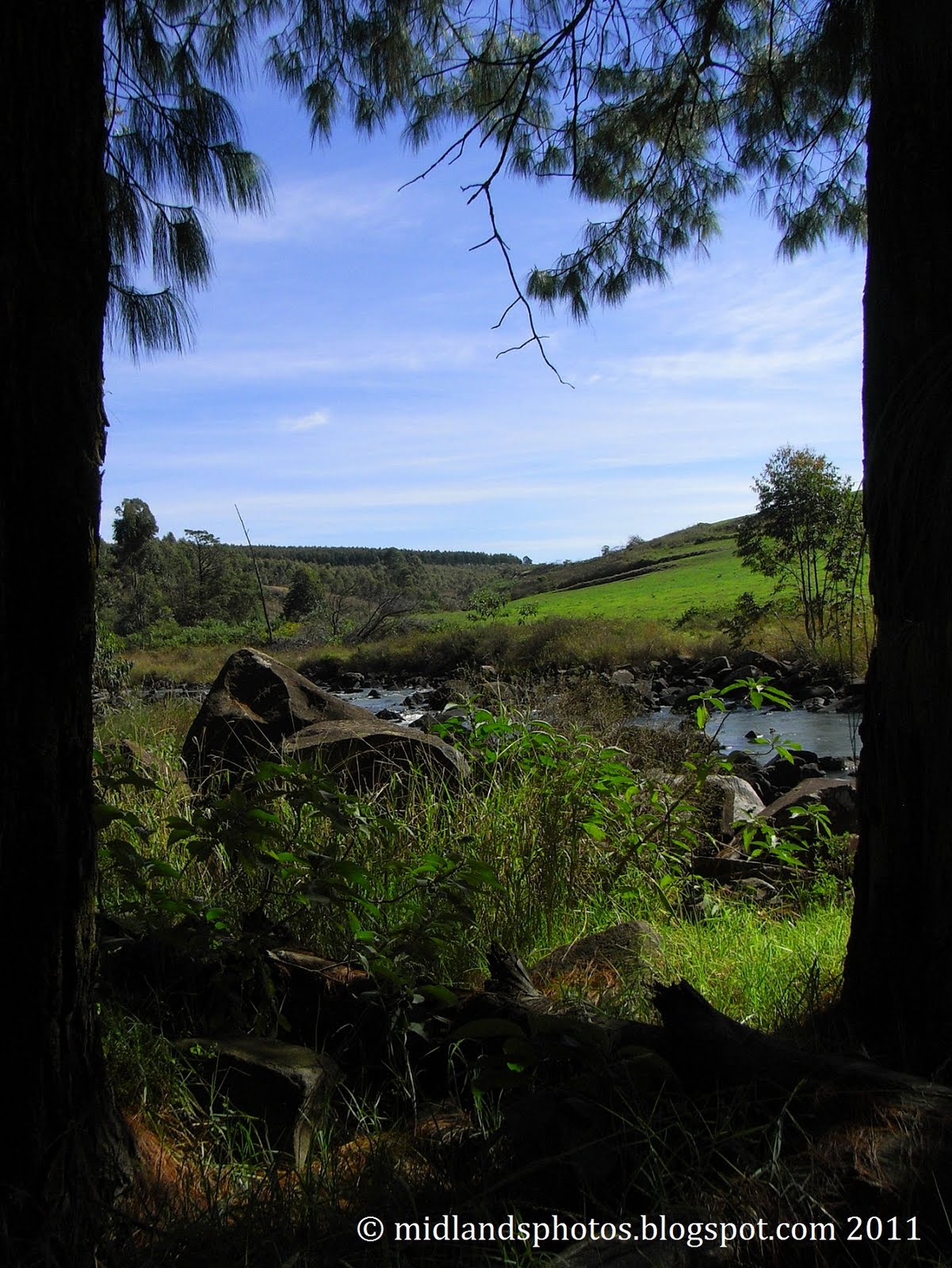
The Midlands area has been endowed by nature with a number of waterfalls, the most well-known of these being the Howick Falls (and its gorge) which were the subject of a few earlier posts (check the archives to the right). I’m trying to get around to visiting them all, and most recently took the road through the Sappi Forests to get to the Karkloof Falls. The road is well signposted from the Karkloof Road outside Howick, and whilst not strictly a 4X4 track, sections of it do require careful negotiation and a fairly high ground clearance in an ordinary vehicle. It is worth the effort, with the Falls being as magnificent (some say more so) than the better known Howick ones. Of equal attraction are the streams and rivers flowing through the gorges and valleys that give rise to these falls. (falls? rise?) Sappi has generously provided well-kept picnic areas around the site of the falls, and it’s a great place to take a leisurely break when motoring around the area. (The provided toilet facilities were out of order due to theft of the copper piping – only in South Africa!!!!). Here we see the Karkloof stream coursing its way to firstly the smaller Woodhouse Falls then immediately into the considerably higher Karkloof Falls.
I usually look for something in the foreground to frame or add depth to a landscape image, and here two lumbering adjacent fir trees did the job beautifully.

Friday, May 27, 2011

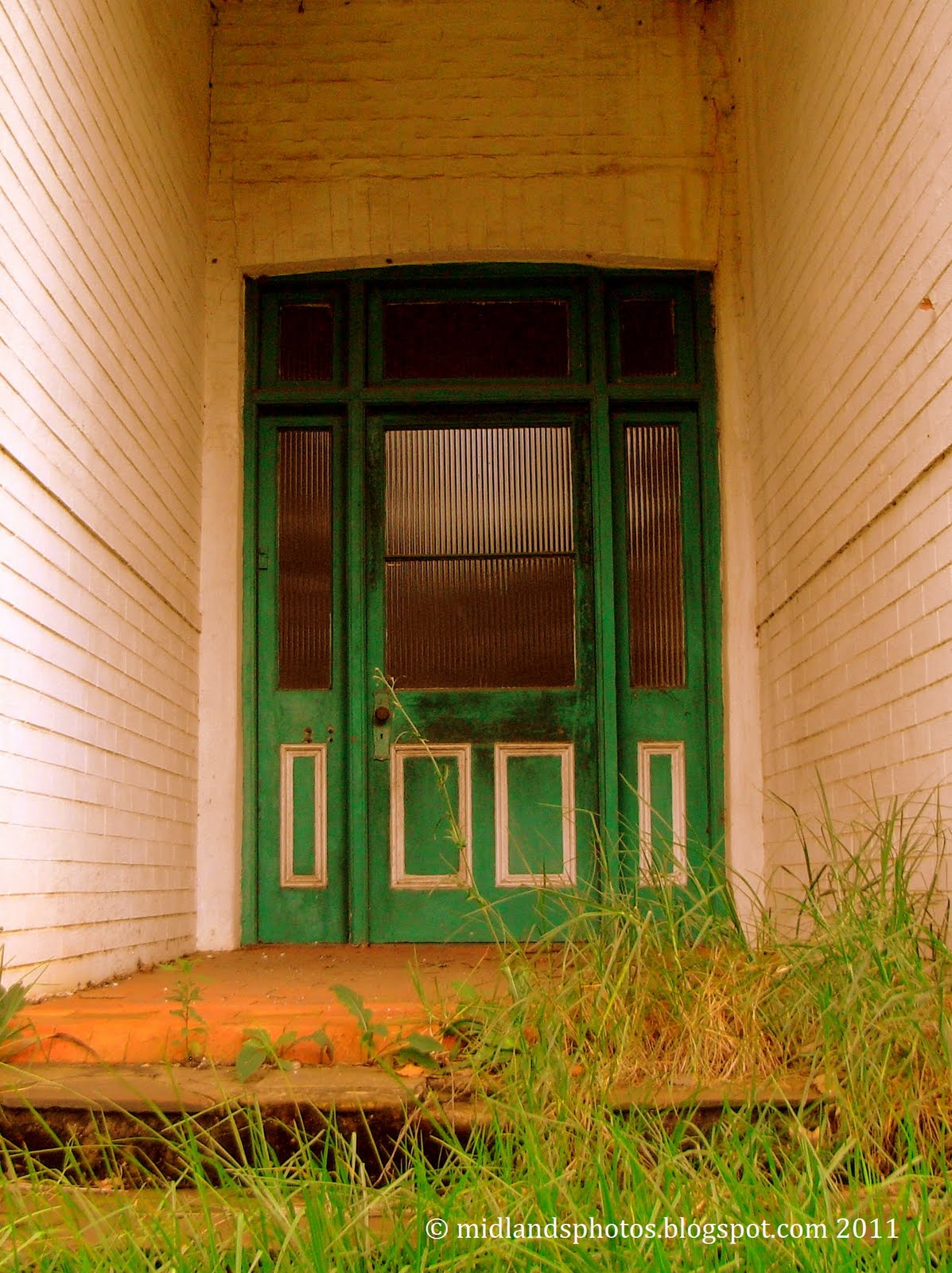
Green Door

What’s that secret you’re keeping? Behind the green door....So went the lyrics of a song I remember from early childhood.
There is a lot of artisanal wood furniture manufacturing done around the Midlands, with outlets such as Homewood (my personal favourite), The Good Furniture Company, Corrie Lynn, and Furniture for Life all being part of the Midlands Meander craft routes. On the district road between Curries Post and Lions River I had seen signs for Swiss Furniture and Flintstones Furniture and decided to follow the bumpy dirt track signposted as the road to their displays. They no longer operate, the signboards proclaiming their whereabouts remain as their tombstones, and the farm on which they were situated is now for sale. That bumpy piece of track leads to a derelict couple of buildings, one being the sad bones of what must have once been a grand Victorian country house. A somewhat aging handwritten notice simply says Farm for Sale, followed by a cellphone number. Judging by the notice’s now greening fungal state this farm too is a victim of the current slump in property markets. A characterful tenant from one of the farm outbuildings greeted my coming (well in truth he ambled out inquisitively some ten minutes after my arrival) and told me that the building dated from the late nineteenth century, but had been unsympathetically altered over the years almost beyond recognition as the grand old lady of early photographs.
I just checked up on that song and I see it was a #1 hit for singer Jim Lowe (who?) in1956. It has had a number of revivals in the years since - becoming yet again a #1 chart topper for Shakin' Stevens in 1981 and even a Spanish hit version in 1986.
How does one capture so much sentiment in a single shot?  I photographed the house from countless angles. I tried my camera’s sepia tone setting. I went to black and white. But looking through all of these images somehow the one that best tells the story is this simple picture of the green front door - keeping all of its secrets.

Thursday, May 26, 2011

Safe as Mountains ...

Having grown up in a mountainous region of Southern Africa – in fact on a farm whose name translated as ‘the valley of hills’ – I didn’t realise how much I had missed having real mountains around me during my ‘Johannesburg decades’ when, apart from the Melville and Kensington Kopjes, mine dumps were about the best substitute around. Someone once said to me that the nicest people come from areas where there are mountains, and the friendliness of Midlands folk tends to confirm that theory. I’m pleased therefor to see that some of them think of mountains as important enough to be kept safely behind lock and key! This appealing outcrop formation lies next to the Karkloof Road just beyond the Crammond intersection. And with a windy cold front and cloudy grey skies having settled over the area today, it seems that winter is finally taking over from an enjoyably mild autumn season.
For a second time I have featured one of the many rusted old gates that dot the Midlands landscape. They often make a fascinating composition, and I intend trying some black and white studies of them in the near future.

Wednesday, May 25, 2011

Making a break ...

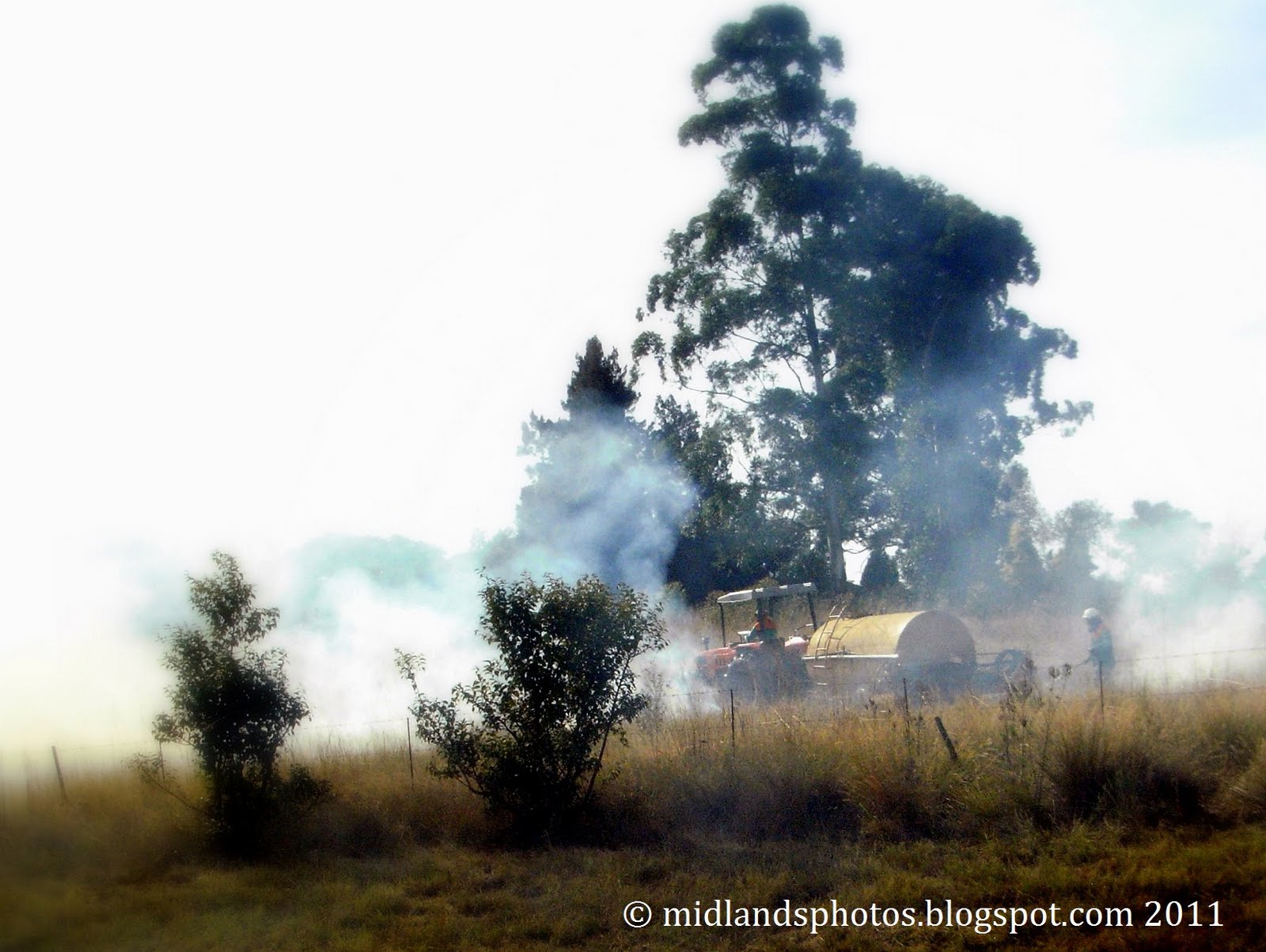
You’ve heard the saying ‘fighting fire with fire’? Well, here we see it in action. As the last official month of autumn draws to a close, and winter moves in to finally decimate the last vestiges of green in the long wild grasses of the countryside, a new threat arises – the bushveld and forest fire. In an area so dependent on timber and forestry to keep its economy turning that is a very serious threat, and many locals will recount with horror the great fires of September 2008 in which some 34 local lives were lost along with countless hectares of blue gum and pine forest. Ironically, warnings merely hours before the event reported that only a few days of the dry weather conducive to veld fires remained. Rain had been forecast. In daytime temperatures of thirty six degrees local fire fighters were called to some 165 fires in the first nine days of the month. The controlled burning of fire breaks was banned – sadly a case of too little too late. The National Veld and Forest Fire Act mandates that landowners prepare and maintain firebreaks in areas where fires occur - such that they have a reasonable chance of preventing fires. I was pleased to see that a neighbouring farm was doing just that yesterday.
The obvious image to have captured would have been the colourful drama of the leaping orange flames, but I wanted to record the human effort and the smoky conditions in which they work to keep our countryside safe. As a firelighter with his gas flamed trace-lighter moved ahead, the team that followed were the driver of the mobile water tank and pump, and the hose handler extinguishing the well-controlled line of flames after it had done its job. In the rear was a final patrol ensuring that all embers had been extinguished. We should be safe this year.

Tuesday, May 24, 2011

Twilight time …

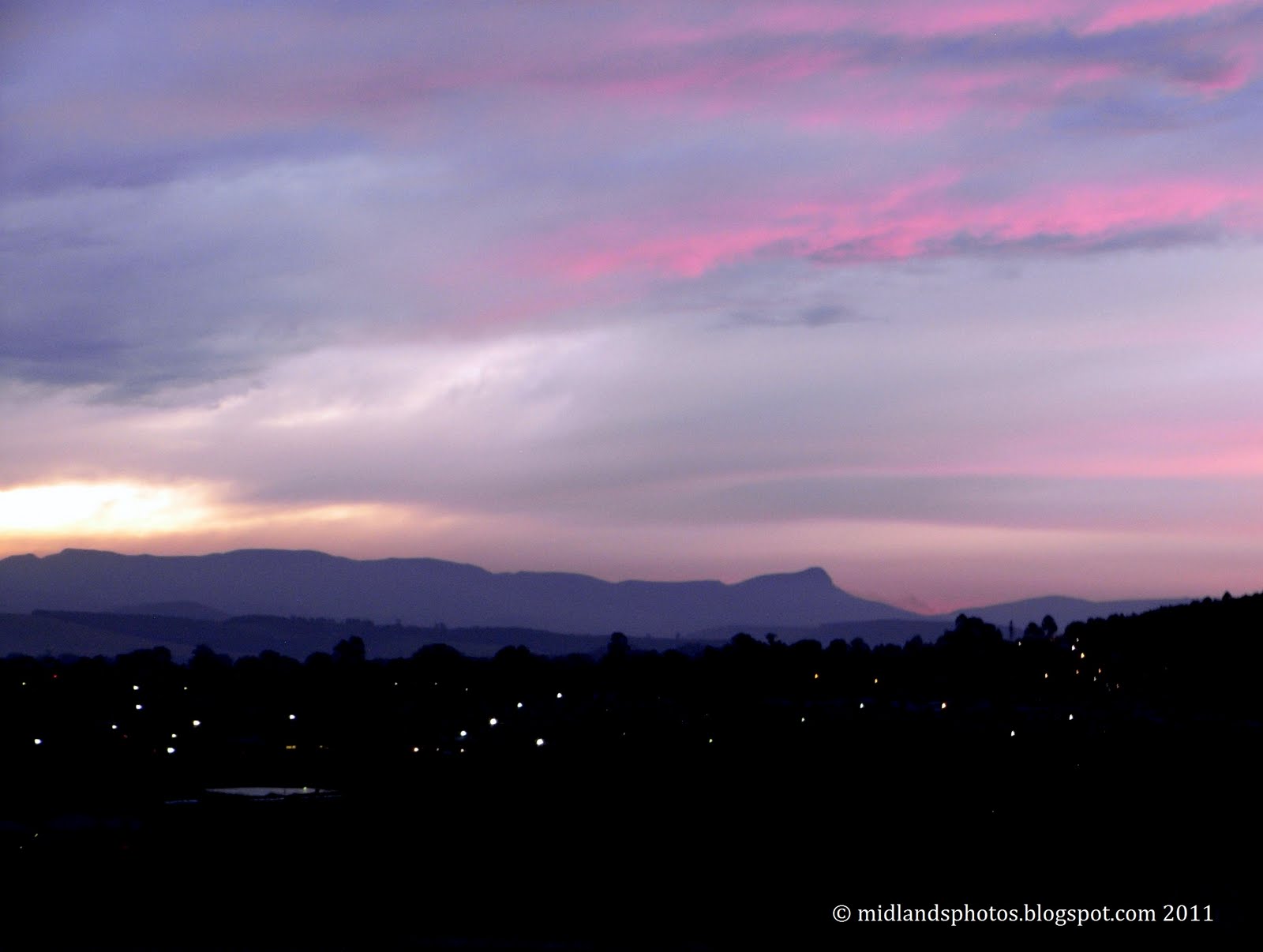
I’m sure at some point in its life every camera gets aimed at a sunset scene – they’re the kind of settings that, like snow covered land or cityscapes, somehow create the most magical and dramatic pictures from what would otherwise be the ordinary and the everyday. Add in a silhouette, or water reflecting the light and you have an instant subject. Last evening, after a strangely cloudy day (it had been a beautiful clear and sunny late autumn weekend), I looked out from the patio at the Midlands landscape that is my daily inspiration and noticed the first tinges of pink starting to highlight the clouds. I must confess – I have never really done sunsets before – somehow they’re too predictable a subject. As iNhlosane became a mere outline (my silhouette) I fetched the camera.
I learned yesterday that with sunsets, when the light strikes just right you have to seize the moment – and pronto. Hardly had I had time to check the lens (an atom of lens dust can ruin a shot that depends on lighting), and camera settings – ASA, exposure compensation, sharpness, white balance, F Stop, focal length (infinity), colour depth (vivid) – when I knew it was time to shoot. After a mere ten minutes the sky had darkened, and the moment was over.

Monday, May 23, 2011

Farmers Markets ...

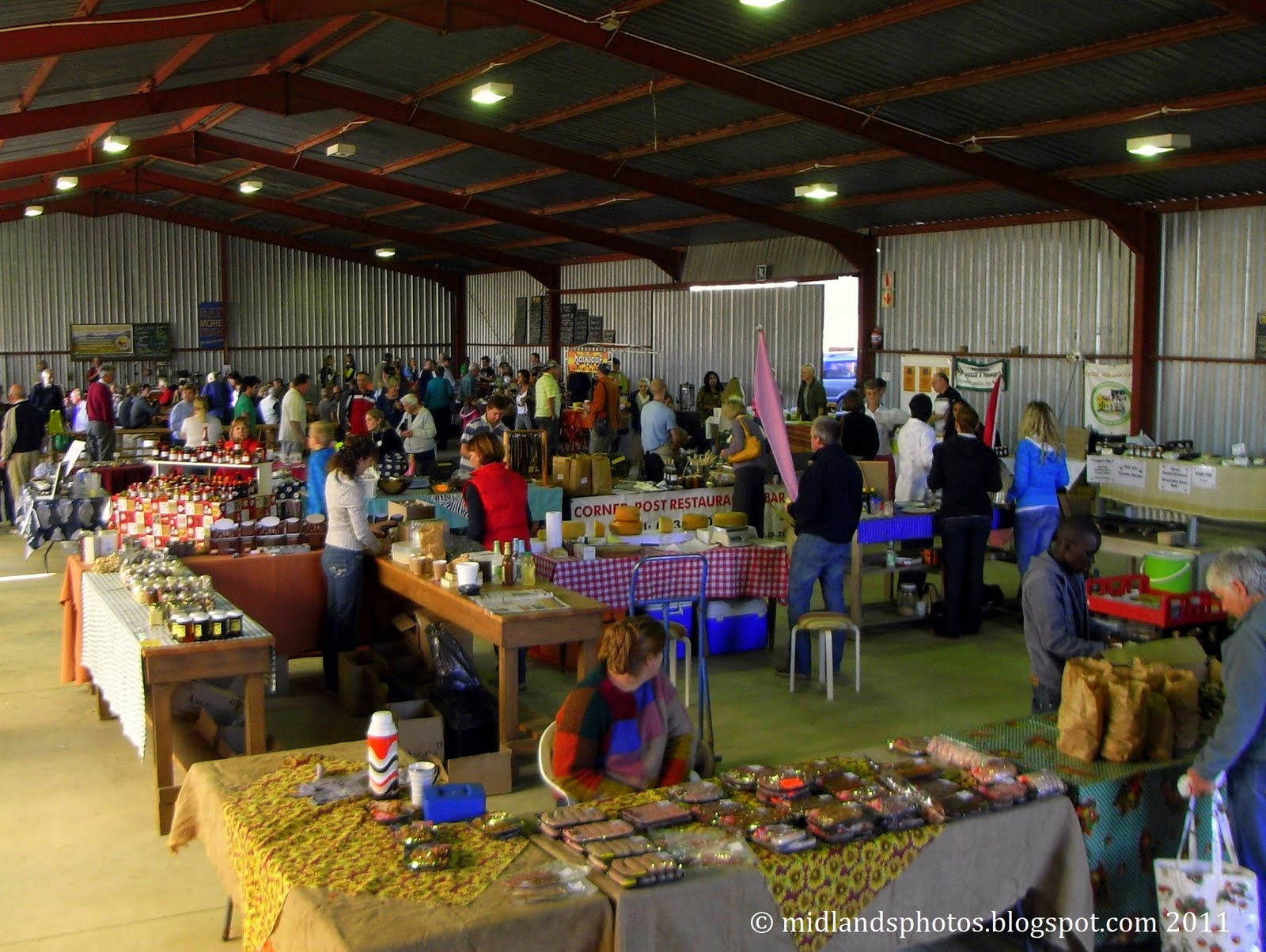
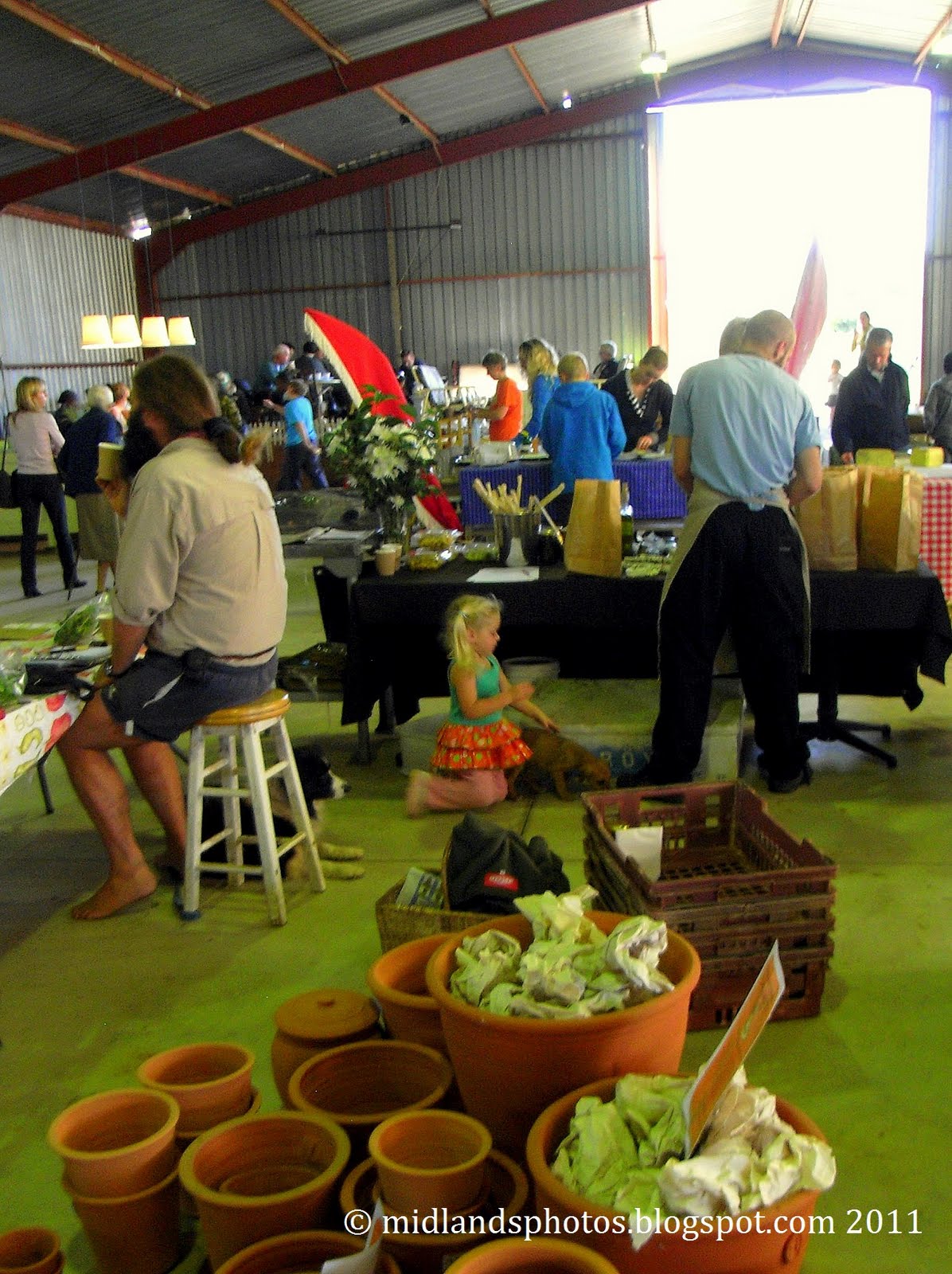
Every Saturday morning, in halls and fields from ‘Maritzburg to Mooi River, you’ll find people gathering for their local weekly Farmers’ Market. Stalls abound offering produce from fresh fruit and vegetables to organic herbs or meat and poultry - alongside home baked treats and confectionery. And at many a market you’ll also find local crafts folk, potters and needle-workers, selling their wares. So much a part of country life have each of these markets become that they’re now a favourite social event where townsfolk gather to catch up on the latest news and gossip almost making redundant the ubiquitous community newspapers. Enterprising caterers arrive and set up kitchens early in the morning to serve robust healthy farm breakfasts, usually the busiest part of the place. Informal tables and benches give one the opportunity to meet and greet the neighbourhood, and the community spirit is palpable – something I never experienced in forty years of big city life. They bring to mind latter day versions of those colourful Brueghel paintings of rural life (with more blues).
I found it quite a challenge to try and capture the colour and the atmosphere of our local market. Overall one gets the buzz of the busyness, yet the scene is made up of many smaller pastiches of social activity that captured individually and statically somehow don’t convey the air of the occasion.

Friday, May 20, 2011

Lucky sign …


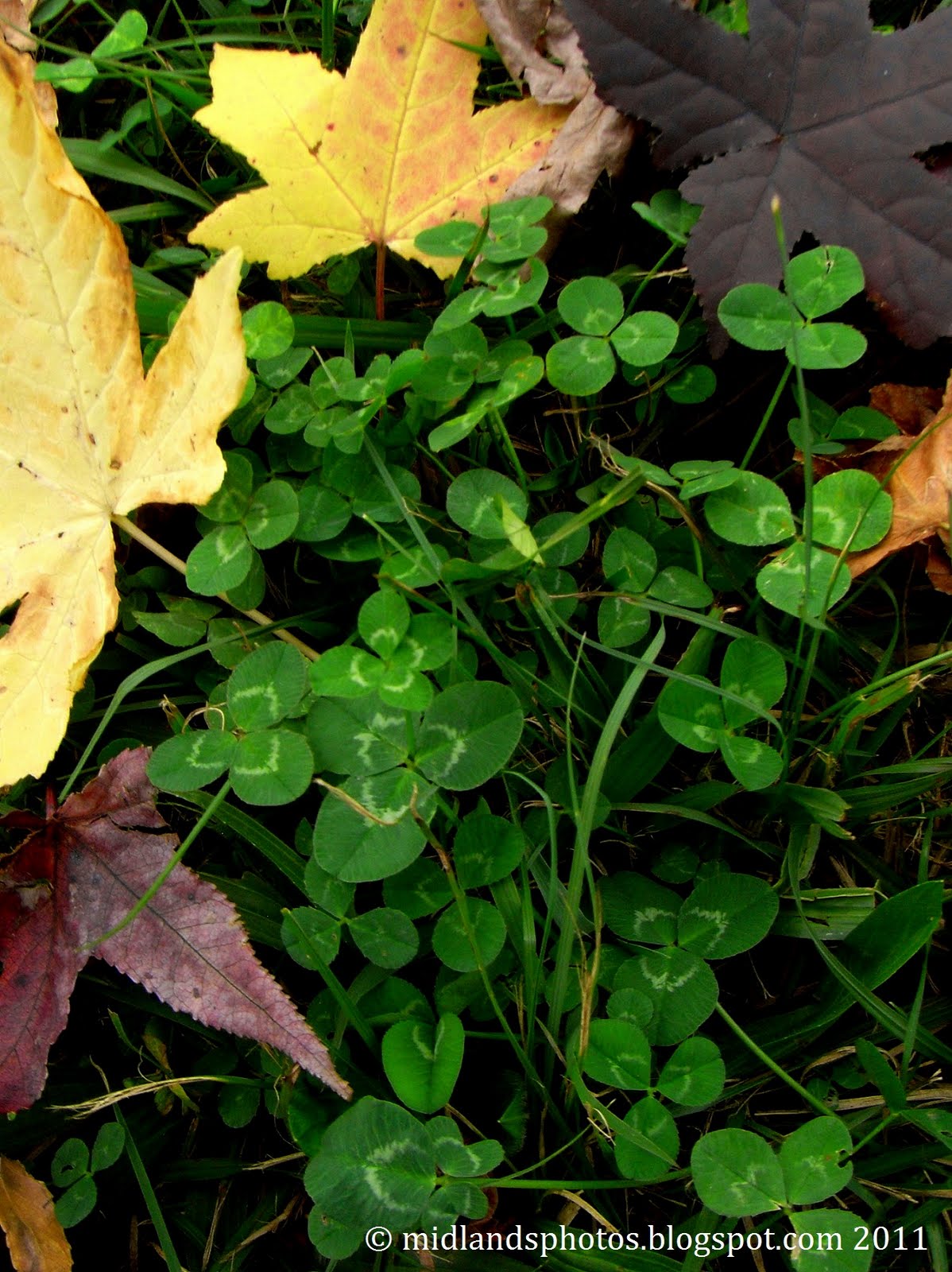
Waiting outside a local shopping centre, yet again admiring the colours of another row of liquid amber trees, I looked down to find I was literally 'standing in clover' – lucky me. Two questions came to mind – firstly is clover an indigenous plant? (There’s certainly plenty of it growing around the countryside, but then so is there of Cosmos, a decidedly imported exotic plant). The second question - do four leaf clovers really exist? Or are they a figment of a leprechaun’s imagination?. The first answer is that there is indeed a single variety of indigenous African clover, Trifolium Burchellianum - and this is it. The common weed Oxalis, sometimes grown for its decorative pink flowering variety is often commonly thought to be a clover due its similar trifoliate leaves, but it is not in fact of the same genus. So, on to the second question which I guess then becomes can a trifolium ever produce a quadrifolium? Look closely at the picture (click to enlarge if necessary) and like me you’ll find your answer. It must be your lucky day!!!
Amongst the settings on my camera is a macro-zoom “scene” setting (it’s  the single reason I bought this particular compact). Going well beyond the capabilities of the normal macro setting of other makes it is remarkable in the detail it can capture with incredibly good resolution even as close as two to three centimetres from a subject. I used it for this image and am delighted with the result.

Thursday, May 19, 2011

Paradise Road …

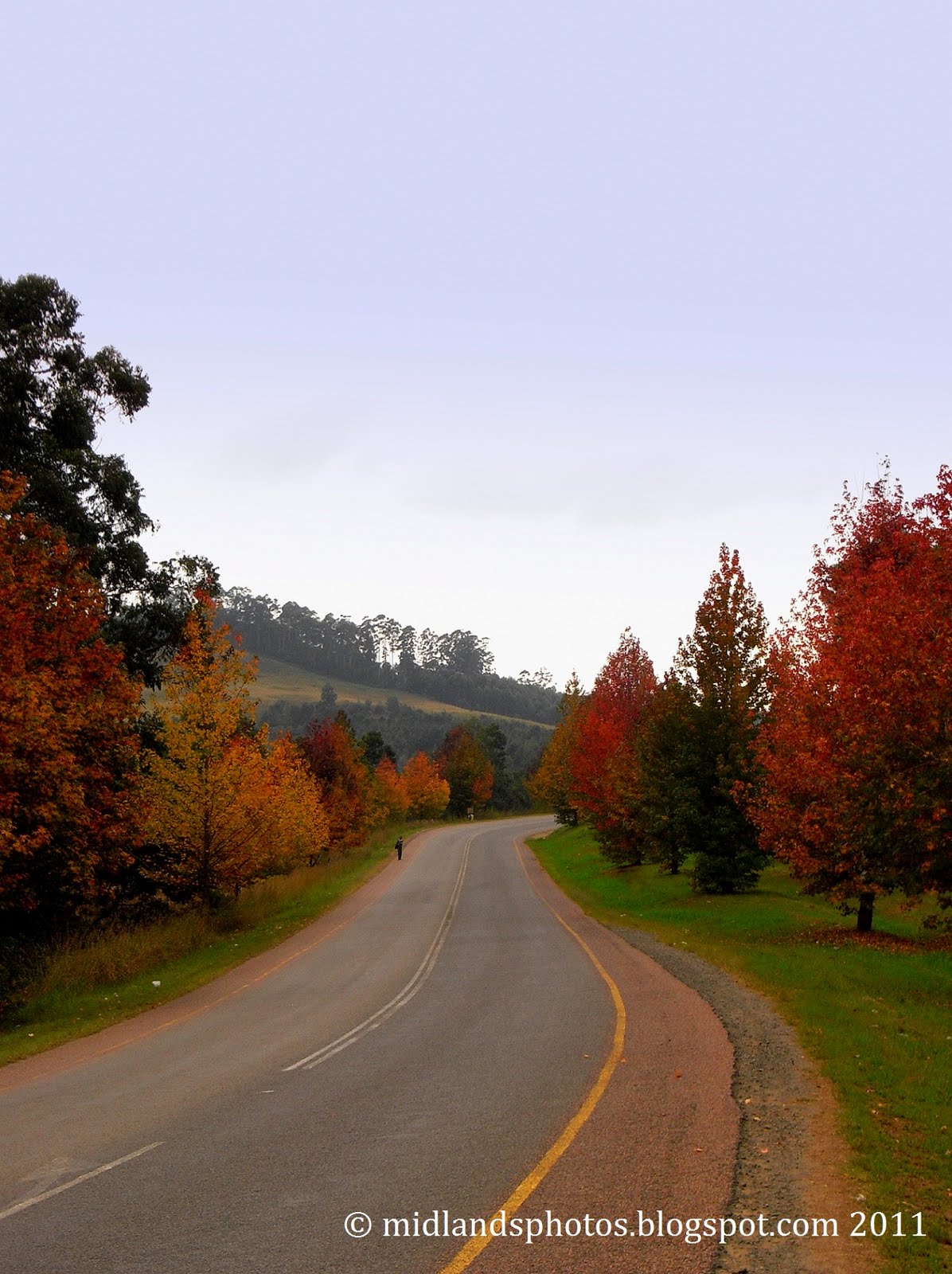
I have mentioned a couple of times how beautiful the autumn colours are in this part of the world, and at the risk of becoming boring, or repetitive … or both, I have a few more images that simply beg to be shared. Today’s shot is of the main road (imaginatively named Main Road) into Howick from the N3 highway Tweedie offramp. The trees lining the roadsides are the ubiquitous Liquidambar Styraciflua (imaginatively named Liquid Ambers ;-) which along with London Plane trees seem to thrive in the area. Natives of eastern North America these trees grow up to forty metres in height, and are sometimes incorrectly identified as Maples due to their very Maple like leaf shapes. The Latin name comes surprisingly not from their amber autumn colouring, but from the gum resin they yield which is a decidedly amber like substance when solidified; this also gives the tree its common American name of Sweetgum. The location of plants will cause some variation in the seasonal colouring which is partly affected by factors such as light conditions, watering and even wind, but there is also a wide variety of cultivars selectively propagated for their varying hues from burgundy through reds and oranges to pale yellow.
For a second time I was caught ‘parking’ in someone else’s driveway while I searched for just the right angle to shoot. Amazing – two autumn tree studies, two coincidental driveway blockings – my propensity to be in the wrong place at exactly the most inconvenient time is incredible. Hopefully the drive owners would concur – the image was worth the small inconvenience.

Wednesday, May 18, 2011

Country Estate


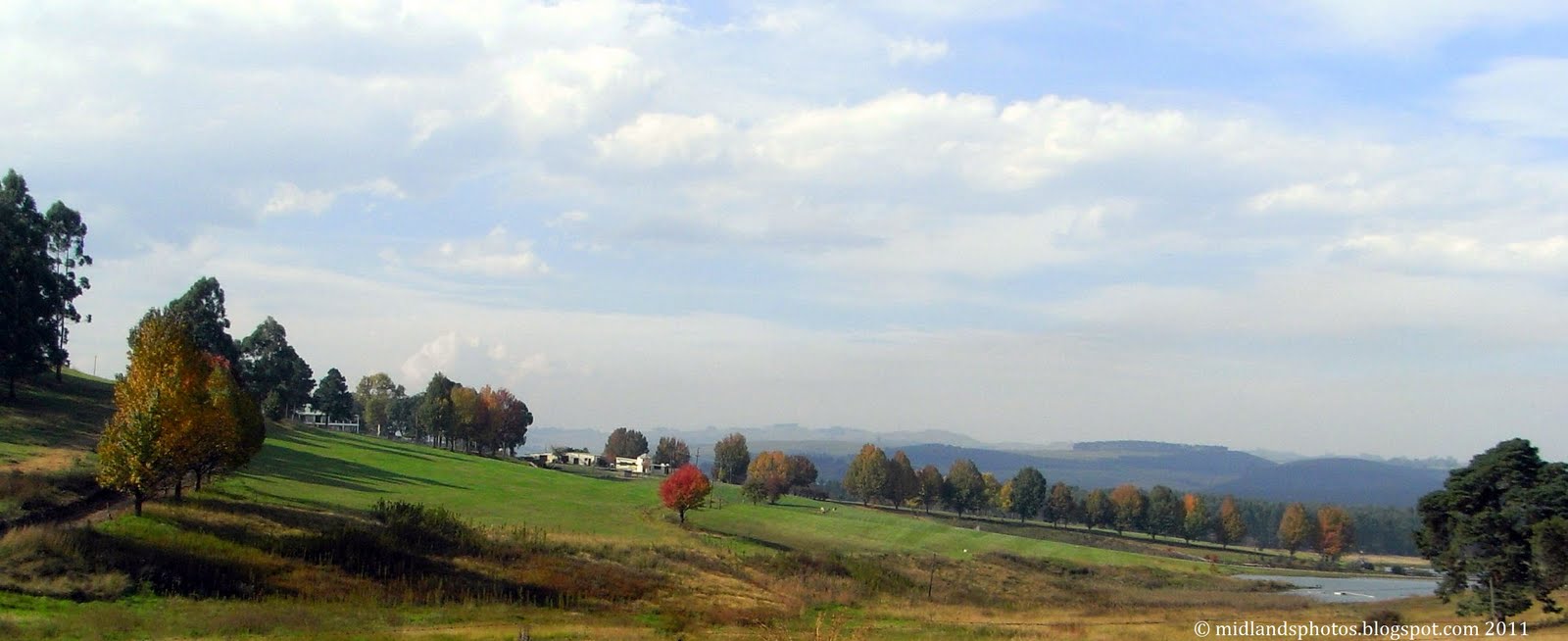
In the Lions River area, on a trip to Nottingham Road (we’ll get there, we’ll get there) I looked across this magnificent panorama. It is a view across the grounds of the country estate of St Ives – a popular Midlands venue. It was here on St Ives Hill that the last remaining local lion was reputedly shot – the area having been a Zulu Royal hunting ground back in the early nineteenth century, when it teemed with elephants and lions. The name was given to the estate in 1862 when it was acquired by one John Day who named it after his birthplace in England. It became a notable horse stud in the early twentieth century. Every time I pass along this road I recall a silly childhood riddle and I idly wonder - with polygamy still a tradition in the Zulu nation - was this where it happened?

As I was going to St. Ives I met a man with seven wives,
Each wife had seven sacks; each sack had seven cats,
Each cat had seven kits:
Kits, cats, sacks and wives
How many were going to St. Ives?

I had tried to get a sweeping shot of the landscape from within the grounds of the estate, but the best I captured was taken from the roadside. The grounds secured by barbed wire fencing I held the camera above my head to exclude the fence’s intrusion, and without the use of a viewfinder in one single exposure this was the result. With lighting through the gathering rain clouds that would have inspired even Turner I think I now have a new favourite favourite!.

Tuesday, May 17, 2011

Old Crock …

I do try to cover a new or different aspect of life in the Midlands every day. But - there are a couple of images from last weekend’s Cars In The Park in 'Maritzburg that are too good to waste and so I’m about to change the rules (which I make up myself as I go along anyway :-) and do two consecutive posts covering CITP 2011.
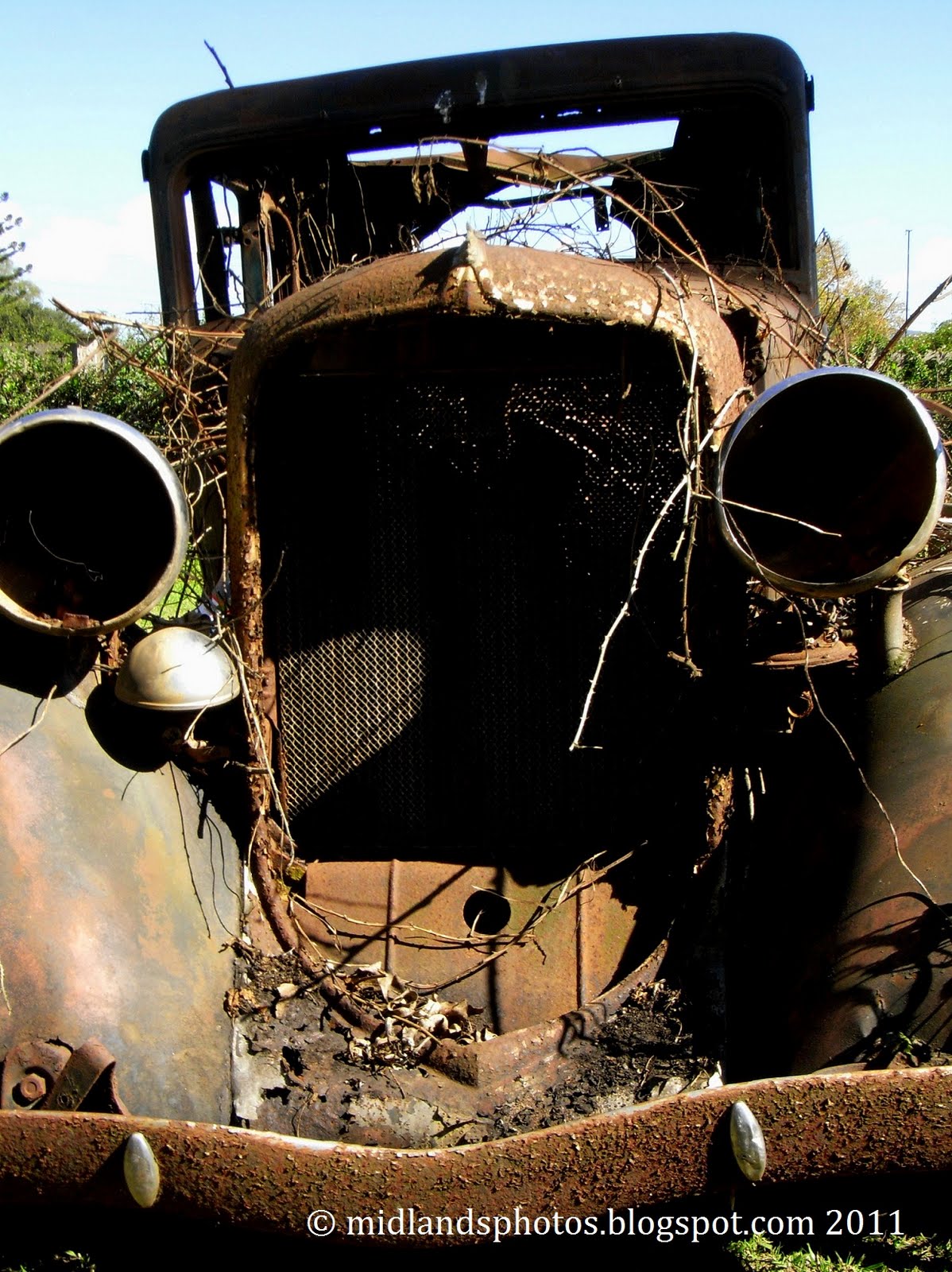
One exhibit which caught most visitors’ imagination was this delightful old Plymouth (1938 P5??) wreck. The theme of the event was “restoration in progress” - and this old girl sure has some way to go! I don’t know if the owner has any intention of her ever becoming anything more than the curiosity she already is, but by the end of the day at least one dedicated preservationist had left a note on (what was once) her dashboard seeking to make contact*. Best of luck to you both!
The old adage about small things … came to mind while seeking the perfect angle to shoot Miss Plymouth. Amazingly she had been transported to the show with her mantle of overgrown brambles and cobwebs intact. Even more amazingly the spinner of the web was still in residence, and many a sceptical onlooker had trouble, and collectively they spent hours, trying to decide if the spider was alive or a planted plastic job.  Trust me – it was the real Incy-Wincy*.
* (see image 2 -click to enlarge)

I guess in allocating locations to exhibits, not a lot of thought goes into how easily photographers will be able to capture good images of displays. One of the most elementary things any future sharpshooter learns is to beware of capturing background objects appearing to ‘grow out’ of a main subject. With a bowling club hard at play behind her, and a modern truck parked left of the exhibit, framing the car was made extra difficult by a lamp post just to her right. All solved by just the right low angle and a bit of judicious cropping.

And now, as a bonus I have to sneak in a shot of the legendary E-Type Jaguar. Probably the first car to feature in my youthful recurring motoring dreams, incredibly it was fifty years ago this year that the world first saw the E-type, at the April 1961 Geneva Motor Show. I’m still dreaming!