A Daily Photo site (Mon - Fri)

Share in the scenic beauty and attractions of KwaZulu Natal's Midlands ....

A shared photo site


(CLICK ON ANY IMAGE TO ENLARGE IT)


Friday, May 13, 2011

Striped ...

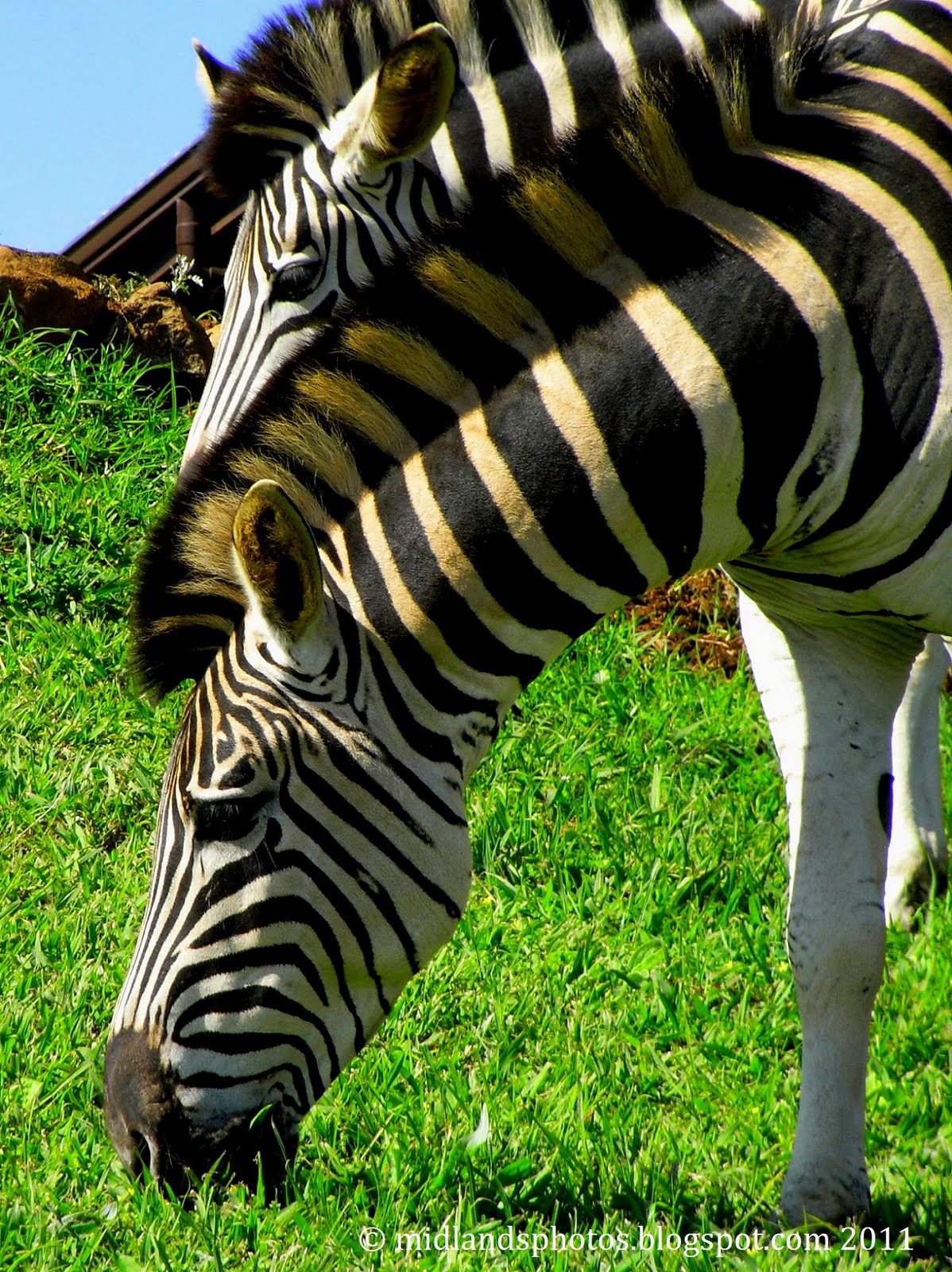
I didn’t have to go too far to get today’s image – in fact no further than the edge of my front garden! I am fortunate enough to live in an eco-leisure estate and the grounds are populated with a variety of wildlife. They’re all classified as non-predatory, but don’t try telling that to the sapling King Protea bush that was transformed down to a leafless stump overnight. Zebras also roam equally freely in the neighbouring (and publicly accessible) uMngeni Nature Reserve along with giraffe, warthogs and many species of buck.
I have always understood the herds of zebra prevalent in most regions of the country to be of the Burchell’s variety and was not aware of the controversy about this name until recently. The facts are well documented on Wikipaedia, so I won’t repeat them here, but it’s an interesting (if confusing) story. Zebras are of course Africa’s best known species of the horse family. A dictionary I have had since my youth, and which due to its now politically incorrect title cannot be named, translated the word Zebra into a pseudo-African language known as fanagalo (=like this) as lo donkey funagalo football-jersey. That describes these beautiful creatures quite aptly (and they do sport the team colours of the much supported local rugby team).
I really didn’t have to do much to get this clear and close shot – these particular animals, although not truly domesticated are used to being in close human proximity. Heck, I could even count the eyelashes! I’m priviledged!

Thursday, May 12, 2011

Lonely Bull ...

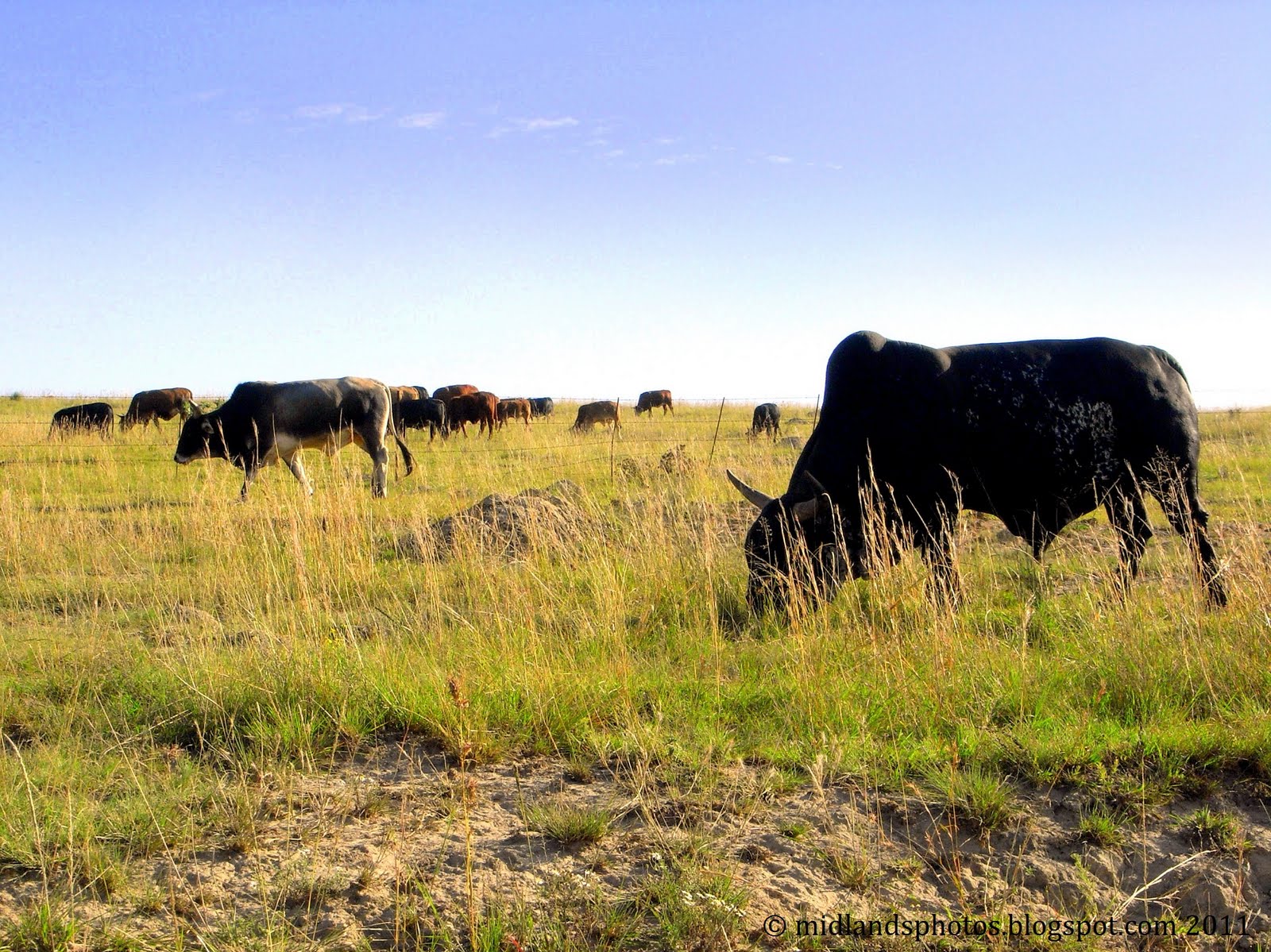
Amongst the most beautiful cattle you’ll ever see are the Nguni – a common sight around the Midlands, with arguably some of the best breeders in country located in the area. The Nguni, although originally a hybrid breed (Bos Taurus and Bos Indicus), are now considered indigenous to Africa, and are popular amongst the African farmers of the southern countries of the continent. It is believed they were introduced by the migrating black tribes from the north in around 600 AD. Known for their resilience to disease and their fertility they have long been seen by the black population, especially the Zulu nation, as a store and measure of wealth with many a bride’s lobola (dowry) having been paid in Nguni stock. Considered medium sized bovid animals, bulls weigh in at around five to six hundred kilos, with cows at around the four hundred kilo mark. A breed standard has been defined and adopted by the Nguni Cattle Breeders Society, but the infinite variety of their multi-coloured and patterned hides still singles each of them out as something special. These much prized hides vary in colour to include black, white, red, brown, cream and dun and frequently a well-blended combination of these colours. I have an often admired pastel artwork of these beasts by South African artist David Johnson, now I live amongst herds of the real thing.
Nguni, due to those patterned hides, are a popular subject for photographers – and hardly a local portfolio I have seen does not include numerous studies of them. I have a standing invitation from a nearby farm to spend some time photographing their magnificent Nguni stock – an offer I shall certainly take up. However, randomly encountering a small herd of grazing Nguni cattle roaming alongside a country road, the opportunity to get my first few shots of them was too good to pass up. This bull (not so lonely incidentally) must have been at the top end of that breed standard – I was relieved how unconcerned he was at my (and the camera’s) presence. I did however still do a precautionary check to ensure that I wasn’t wearing any red rags!

Wednesday, May 11, 2011

Coral Tree ...

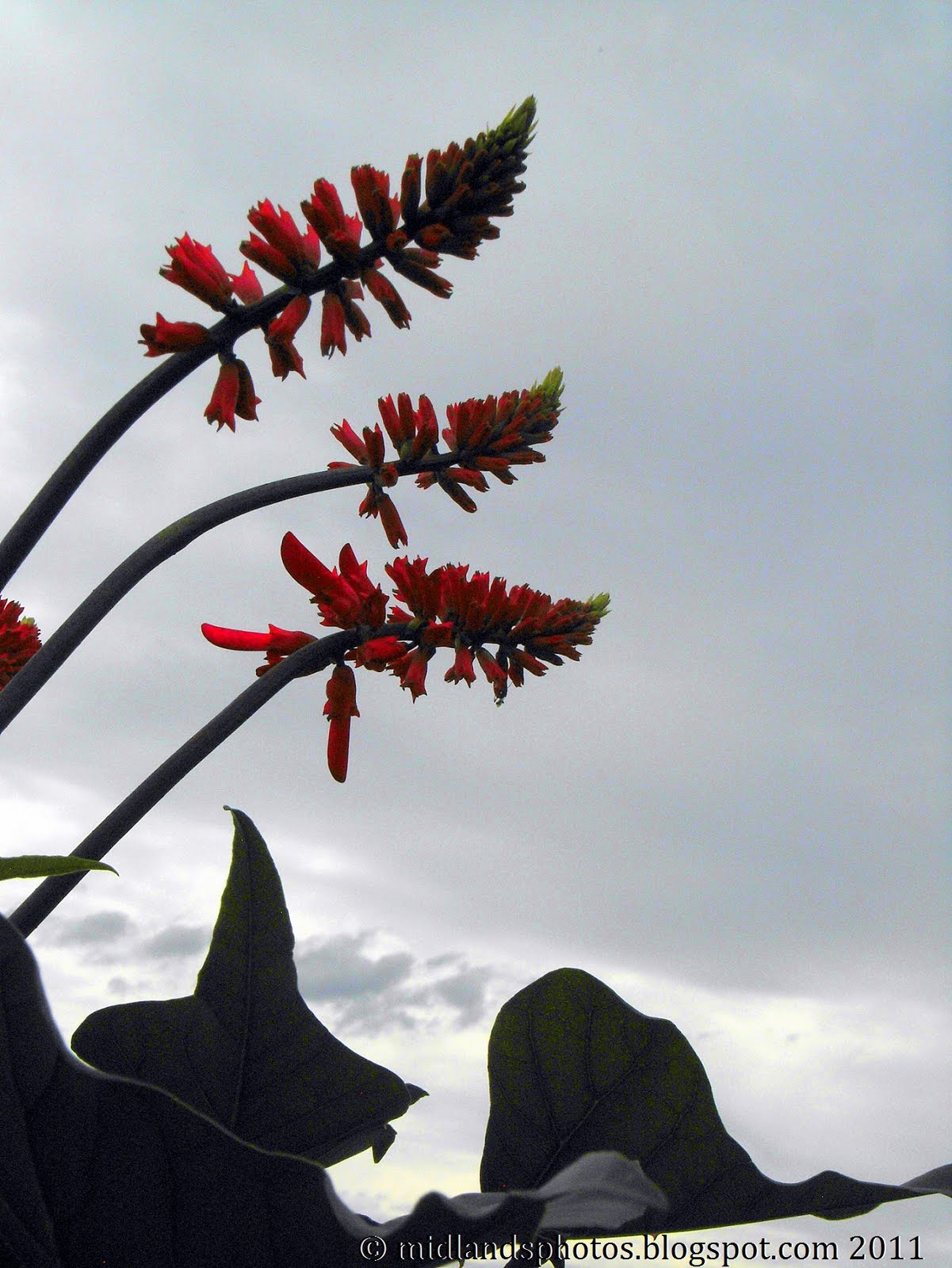
I haven’t focused much (no pun intended) on the indigenous flora and fauna of the region so far, so today we’ll start to rectify that omission. Although richly planted with exotic species (as we have seen in the autumn colours of the area) the Midlands abounds also with beautiful indigenous specimens. There are certain varieties of animal and plant life endemic to the region and these will be a quest for me to seek out and show in later posts. Many gardeners (myself included) have taken on the challenge of developing the built environment with exclusively indigenous plants, and one popular choice that thrives in local conditions is the coral tree. Found naturally from Mozambique to the Eastern Cape (the broader Eastern coastline), there are a couple of varieties, including this dwarf species (Erythrina Humeana). With a rambling habit the most striking feature of the plant is the vivid red flowering heads produced from Spring to late Autumn reaching 300mm to 400mm long. These trees attract  birds (especially the sunbird species) to the garden making them a must for every small garden.
Against a grey cloudy sky, a soft fill in flash brings out the more subtle colours of the flowers of the coral tree without becoming the obvious statement in red used as illustrations in most botanical books. Different.

Tuesday, May 10, 2011

Roosters Rule ...

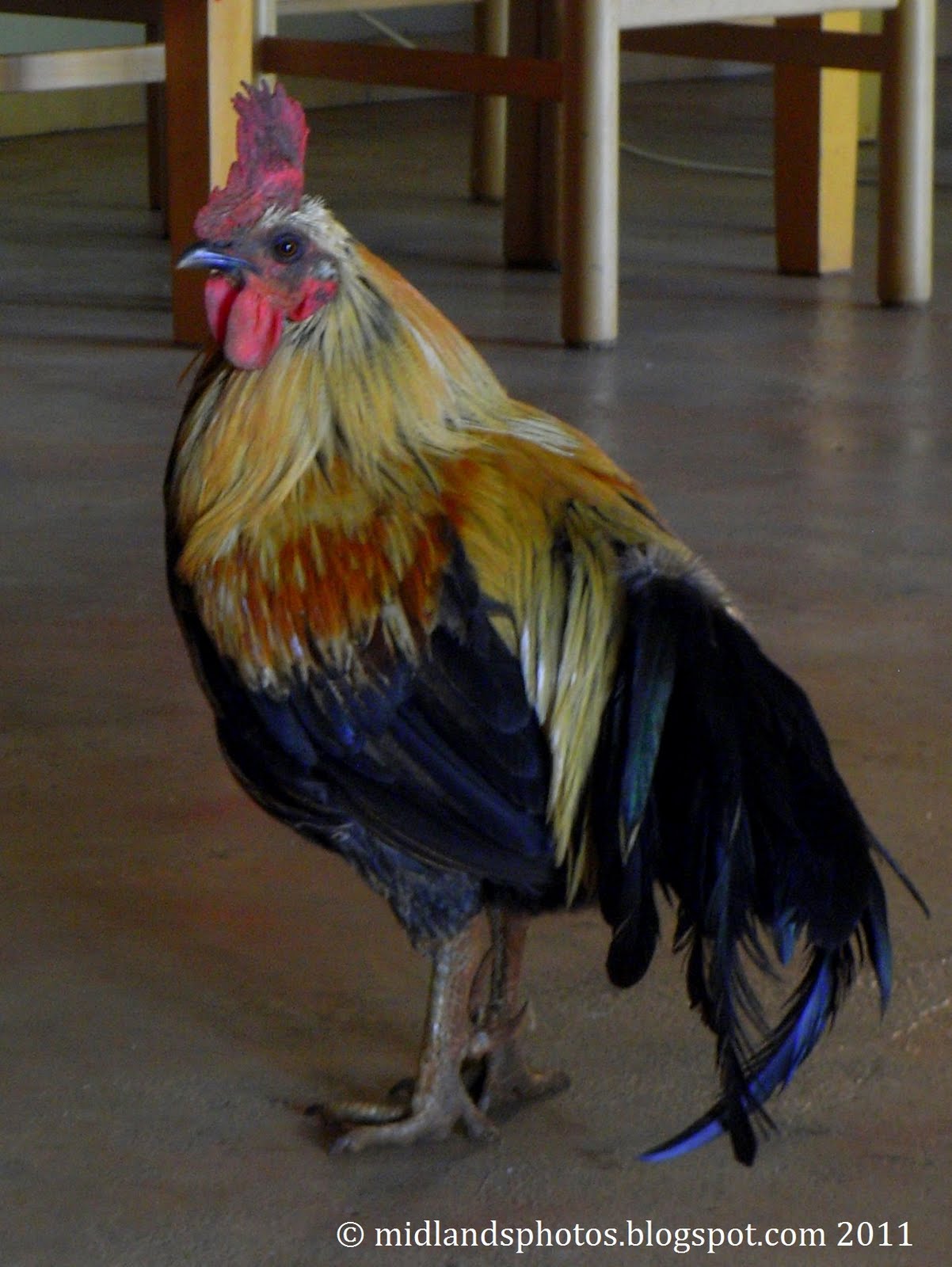
Local eateries (and drinkeries) seem to teem with characters. And, unlike city establishments there seems to be a somewhat more relaxed feeling about the presence of animals. As a lifetime bunny hugger and dog lover that sits quite comfortably with me – there’s something homely about a hotel or restaurant dog choosing you to give those soppy ‘just a taste please’ looks to. And it usually works – despite the owner’s admonishment to Rex or Ruby to ‘leave the guests alone’. THAT never works, and I’m sure they know it. I must admit that this little character was a first for me – for never before have I had that experience with a rooster.
Strutting around in the bar at an inn in New Hanover I guess the attraction here would probably be the peanut bowls. Whatever it is he certainly looked as though he gets his fair share. And with looks like that it was clear that the owner never sees him as the main ingredient for the next dish of coq au vin.
A typical English game bird, the iridescent colours of his plumage show well against the rustic oxide rubbing of the bare concrete floors. And if that’s not a beady eye, I don’t know what the expression means!.

Monday, May 9, 2011

Windthing ...

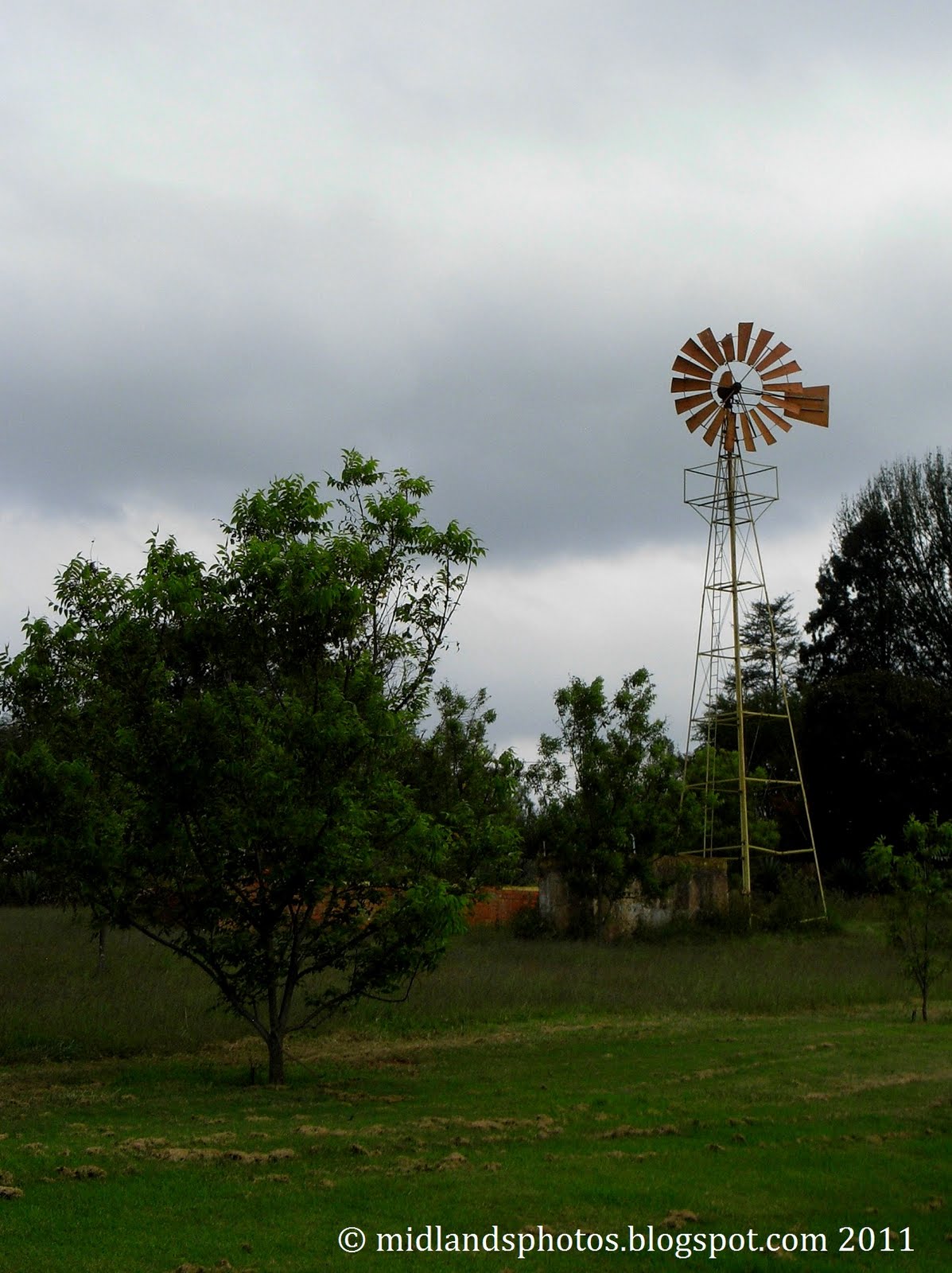
Mention a windmill in South Africa, and except for a few of us (any Hollanders in our midst?) this is what will come to mind. For almost as long as I can recall I have wondered why we insist on calling these towering objects windmills – for they never milled anything and never will. Windpumps? Yes! Now that would more accurately describe their purpose, but if I talked about a windpump nobody would have a clue what I was on about. No matter though, windmill or pump, these lofty workers are found throughout the South African landscape and they add great character to the countryside. They sit above our wells and boreholes – any underground water source - and provide water to our thirsty land. I may be mistaken, but their number seems to declining and so I was delighted to have found a few, still in operation around the Midlands area.
It is unusual to see a windmill in such a verdant setting, and I found the colour of the rust red bricks of the reservoir and the oxidised iron blades of the sail and its rudder added just an interesting touch of subtle colour to this composition. Not a typical SA windmill shot, and yet it couldn’t be anywhere else.

Friday, May 6, 2011

Picturesque (Craigieburn) ...

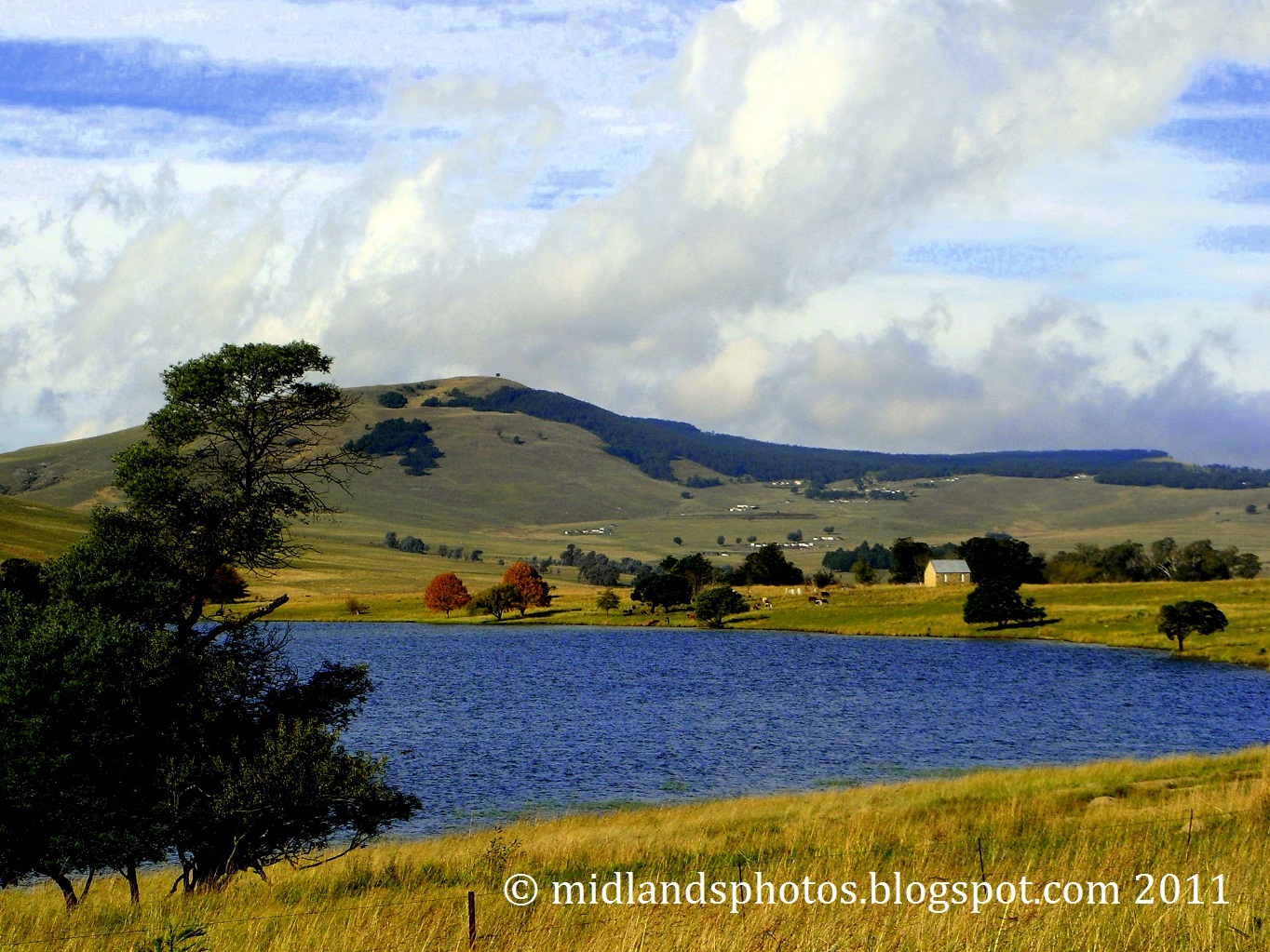
If you wondered where that country road took me, here (amongst other places) is the answer. The day was originally planned with a newfound friend as a trip to Greytown, with hopefully a picnic somewhere along the way. We did get there, kind of, but will do the town more justice with a later follow up visit. Making the journey a round trip from Howick to Greytown and back via Mooi River we passed Craigieburn Dam. Once a popular day venue, it seems to have lost public favour and is now one of the area's well kept secrets. This posting may just change that status, although I suspect not - and that's not a bad thing for the fortunate ones who do find their way there. Lunch happened a little later than we planned (OK we didn't really plan anything for the day other than to enjoy it), but his is the view that finally stopped us. At the side of the road we did what I haven't done since I can't remember when. We spread a blanket in an open field, and had a good old-fashioned Sunday picnic. Try it sometime - it's great for the soul.
In all the years I have been snapping photographs (if you remember Kodak Brownie box cameras you'll know how long that is) there are probably some twenty of my own shots I just cannot erase from my mind (there are plenty of other peoples'). Somehow sometimes everything seems to come together as if by magic. A sparkling blue dam, a small country chapel and its graveyard, grazing cattle, autumn coutryside colouring, distant signs of human settlement and a sky to inspire Pierneef. No further mixing required for the recipe. Nature had done that. This makes it twenty one shots.

Thursday, May 5, 2011

Timberrrrr …

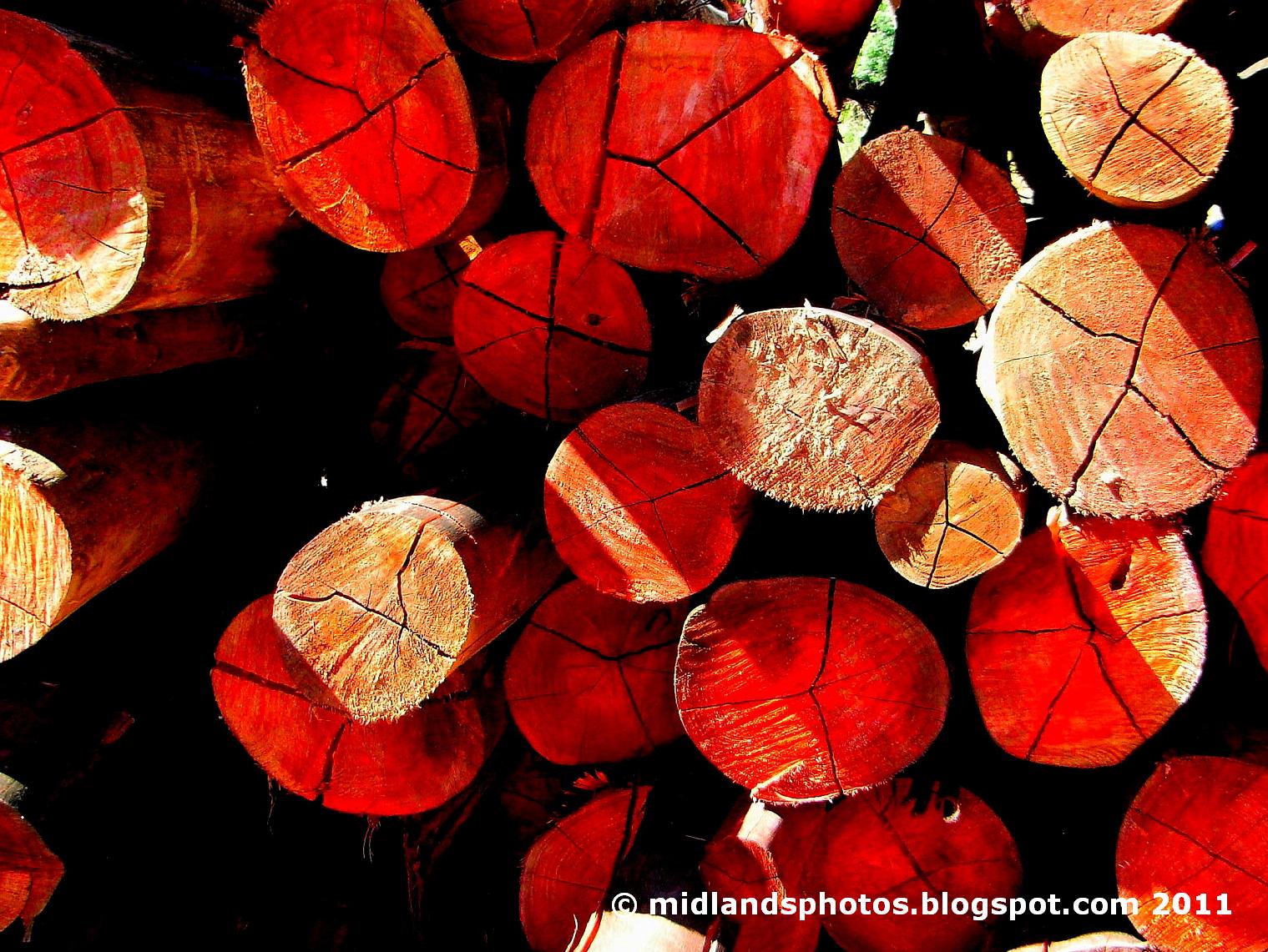
Large tracts of Midlands land are taken up by forests; predominantly these are owned by our two largest paper companies Mondi and Sappi. Open fields of saplings, trees in their teens, and mature and dense plantations liberally cover acres of Midlands' ground. And then, as seen here, you’ll come across stackings of fallen trees ready for transportation to their next stage of processing. Many a well laden timber lorry has been the cause of slow progress along a winding Midlands District Road. But who's complaining? 
Today, a simple image, but a favourite. Although this is raw unprocessed timber I like the warmth and simplicity it conveys - and I do love wood. Many photographers get excited about abstract and semi-abstract textural and pattern shots – and I am no different. Whether it’s the tracery of the twigs and branches of a winter tree, or the random patterning of multihued beach pebbles or shells there is something challenging about shooting textures, colours and natural pattern repeats. The rich hues and shades of a pile of sapele wood logs in the late afternoon light just begged to be shot. And so, with an exposure compensation of -1.7, I shot. 

Wednesday, May 4, 2011

Country Roads ...

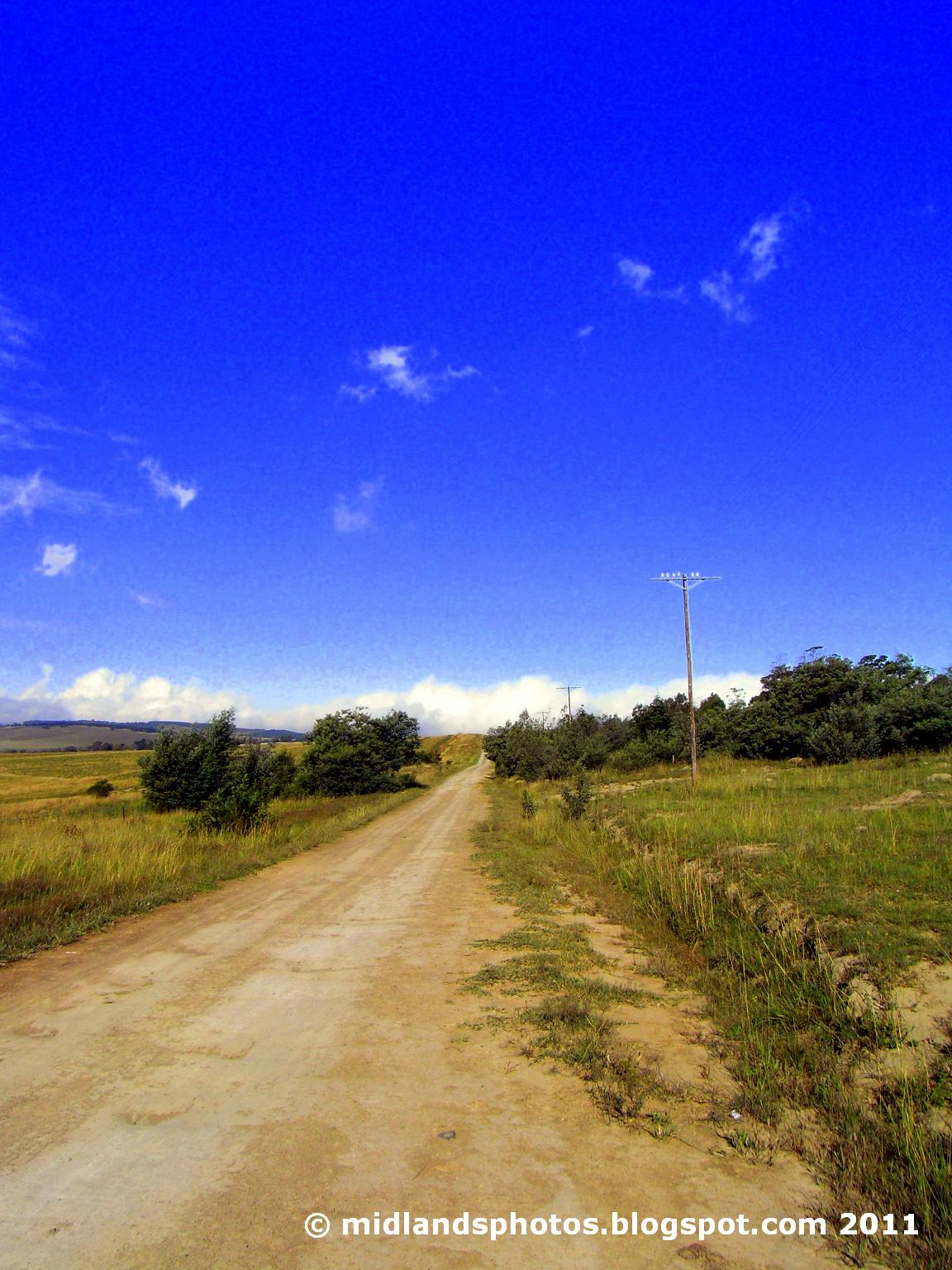
They would eventually take me home, as the John Denver song suggests, but with the number of public holidays we’ve had recently there has been every reason to let them do just the opposite and take me to places still on the haven’t-been-down-this-one-yet list. Roads in South Africa are alphanumerated with national highways being Ns, major metropolitan freeways being Ms, and significant regional stretches known as Rs. I have now discovered that in the countryside we also have district roads – the Ds, and I’m changing a life of mainly Ms and Ns for one of predominantly Rs and Ds. It used to be that you would expect the rs and ds to be slightly blemished, but in line with the rest of the world it seems that the SPK (slaggate* per kilometre) benchmark is increasingly being set by the ns and ms. I also observe we seem to have a new road sign. It’s a red triangle surrounding an exclamation mark! Economical no doubt, is the missing prefix SH**? Or something stronger? Anyway the SPK rate of any stretch of M, N, R or D is a kind of inherent calming measure, and so a leisurely pace along our country byways is almost mandated. Not that I’m complaining of course. It gives you time to stop and smell the grasses.
A clear blue sky with slowly building clouds on the horizon (which changed dramatically within half an hour and fifty kilometres of this shot) a dry dusty road, and parallel roadside telephone lines to lend perspective make even an otherwise everyday mundane shot, a landscape. It does remind me of perspective studies from my art student days – maybe I’ll draw and paint again one of these days. But a camera is so much easier!

*potholes

Tuesday, May 3, 2011

'tis autumn

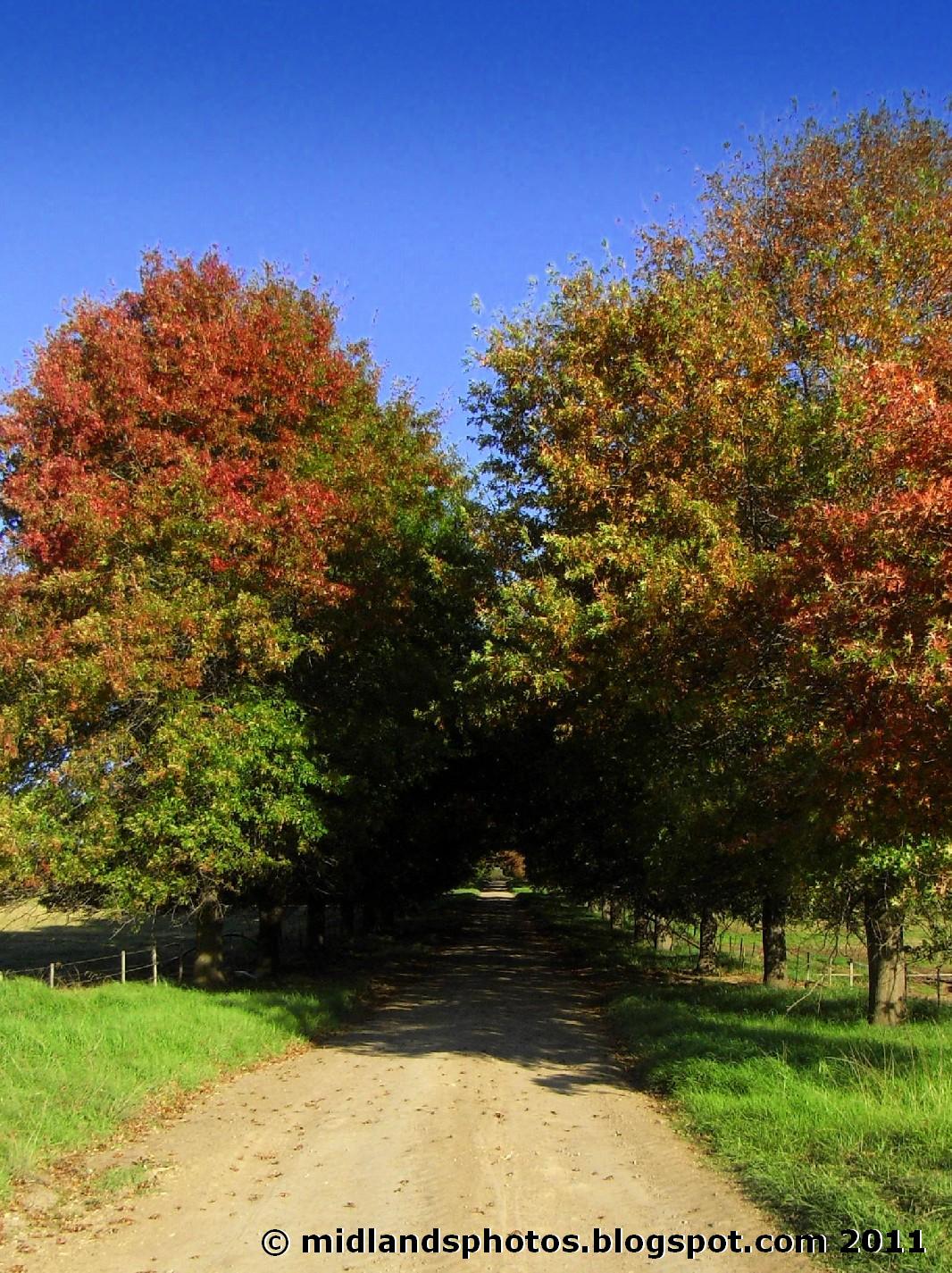
Someone in the Midlands must have made a killing selling London (or English) Plane Trees and Liquid Ambers to the community – yet another link for the last outpost to that British Empire. So ubiquitous are these trees in the area today that they give the Midlands its familiar autumn clothing – and fine clothing it is right now. Hardly a landscape in the area is not coloured by the distinctive multicoloured foliage of anything from a solitary specimen to groves of trees lining many a driveway. It is incredible how varied the leaves become as they lose their rich summer greens and prepare to shed, some turning to red and bronze, and others to various shades of gold, ochre and brown. It is no wonder the Americans call this season fall – for the carpets of plentiful dropped leaves add greatly to the beauty of the countryside. Growing some 30 to 50 metres tall they thrive in moist conditions, yet in cultivation appear also to handle fairly dry conditions too. Indigenously the Planes, known as the genus Platanus, are found only in the northern hemisphere, fossil records dating them back some 115 million years. The London Plane variety is actually a cultivated species, generally believed to be hybridised between the oriental plane and the American sycamore varieties.
Driving near the Midlands town of Mooi River on a bright sunny day this farm entrance driveway was a blaze of colour. The impossibly blue sky contrasted magnificently with the turning leaves. Having parked at the entrance to the road, a group of people was slowly wending its way towards me. Often accused of not including people in my photographs, I wanted to wait until they came into the closest of the sunlit breaks in the trees – and then, by unbelievable happenstance a visiting car pulled up behind me and I had to move away to let them in. Opportunity gone…..but it’s still a nice shot.

Monday, May 2, 2011

Howick Falls & Gorge 5

After a right royal interruption it's back to the falls and gorge one last time today.

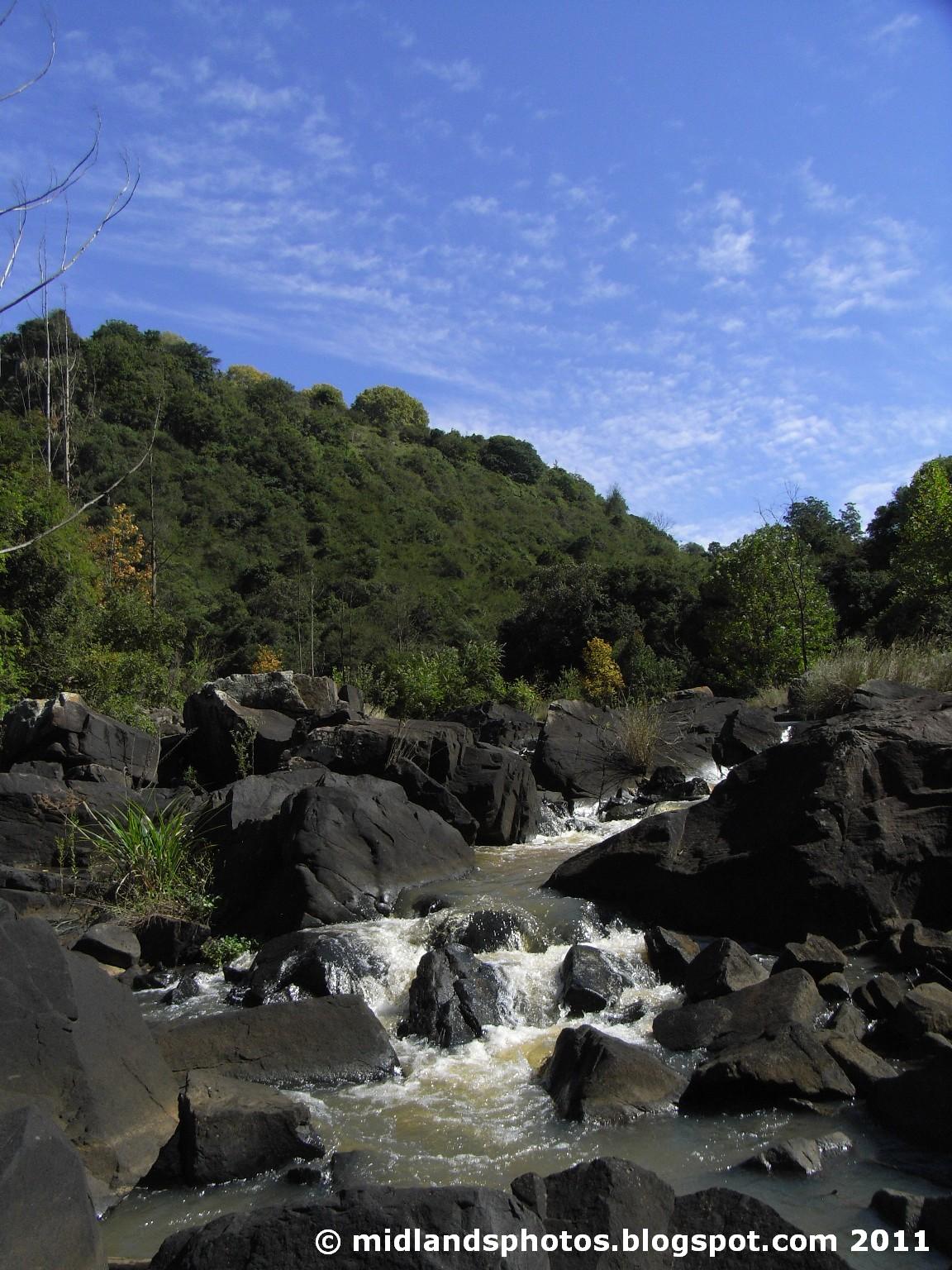
If you want to know how worth the while it is going further down the gorge, rock hopping your way along the edges of the Umngeni River this is the terrain you’ll be crossing, and the sight you’ll see. Small cascades and waterfalls appear all along the route. After years of city life I appreciate the chance to get away and soak in a bit of country air – and it doesn’t get much better than this. Actually I seem to say that each time I find another place to enjoy, so probably it does! The basalt rocks seen here are typical of the area and in many places form a natural stairway to help you on your way. They can be slippery when wet and so, remembering that disclaimer signed on entry to the trail, soles with a good grip are a must, and do take care.
The deep slate grey of the rocks contrasts well against the white waters of the flowing river. Needing all four limbs clambering around the gorge, a compact pocket-able digital camera is the ideal tool to capture the occasion. In my opinion the image quality and zoom capability of today’s compacts makes the use of full sized DSLR’s obsolete for this type of photography.